
Nowadays, everyone consults with search engines before they spend money on something. You understand the SEO benefits for your business. You hired an SEO agency and want to see if they're doing a good job.
If you do a Google search, you'll discover many ways to measure SEO performance.
But if you have to learn how to read all the metrics and use all the tools...You may as well learn how to do search engine optimization. I'm sure you prefer to focus on your business.
So, let me show you how to tell if your SEO company is working in 3 easy steps.
How to Easily Evaluate Your SEO Company's Work
A good SEO company (not a consultant you hired for general guidelines — more on that difference below) will come up with a solid SEO strategy. It will include different tasks based on your website traffic and current SERP rankings.
You should frequently get reports on this, but they aren't always easy to understand...Plus, reports can be manipulated.
No matter the tasks, the goal is to get more organic traffic for specific keywords related to your business. Some folks use Google Analytics, but there is too much going on there.
I'll show you how to see if your SEO is working using Google Search Console.
1. Track the Number of Indexed Web Pages
An increased number of pages visible in search engine results shows that your company's SEO efforts are working. To check the number of indexed pages, head over to Google Search Console.
Look at the left, and you'll see "Indexing." Click on pages, select "Indexed," and you'll be presented with a similar screen.
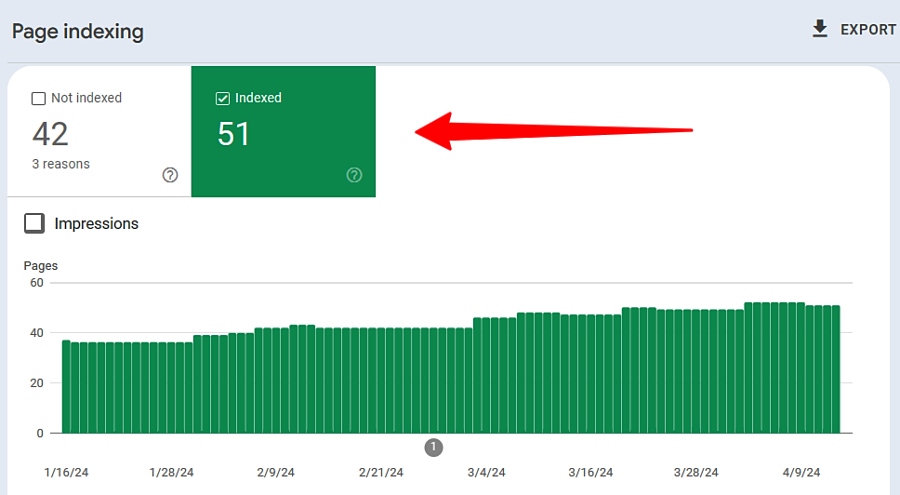
As you can see, there are dates at the bottom. Compare the periods before and after you hired the SEO company. A growing number of indexed pages means more of your content can show up in search engine results pages.
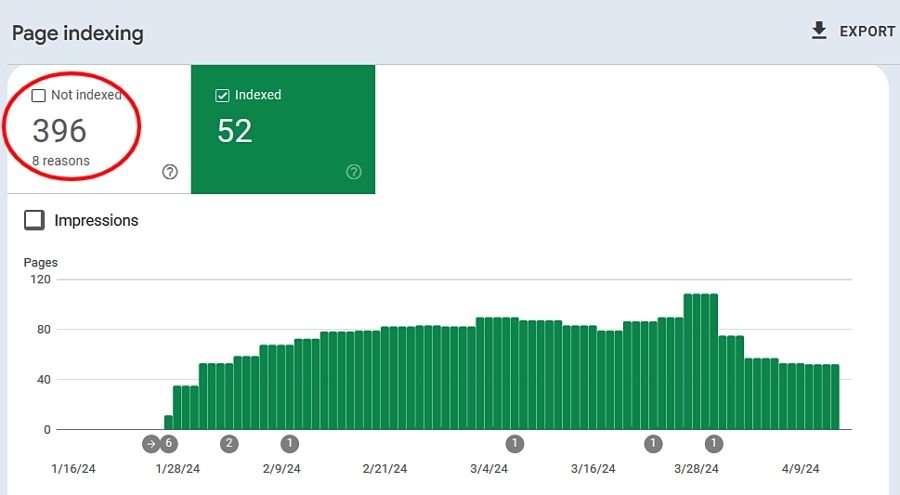
Part of the search engine optimization work might require cleaning up existing content. Typically, this is the case with outdated posts and categories on older websites or newer ones with low-quality content. Deleting useless content will improve your overall SEO rankings.
If that's the case, I'd assume the company informed you about it. So, if you see something like this where the number of not-indexed pages is higher, don't worry.
2. Look at the Total Impressions and Clicks
The next step in evaluating SEO success is looking at vital metrics like total impressions and clicks. Depending on when you installed Google Search Console, these reports will be either under "Performance" or "Search Results."
The number of total impressions represents how often your site appears in search results. As for clicks, they indicate how frequently users are actually selecting your content from those results. Ideally, you should see both graphs being in an uptrend.
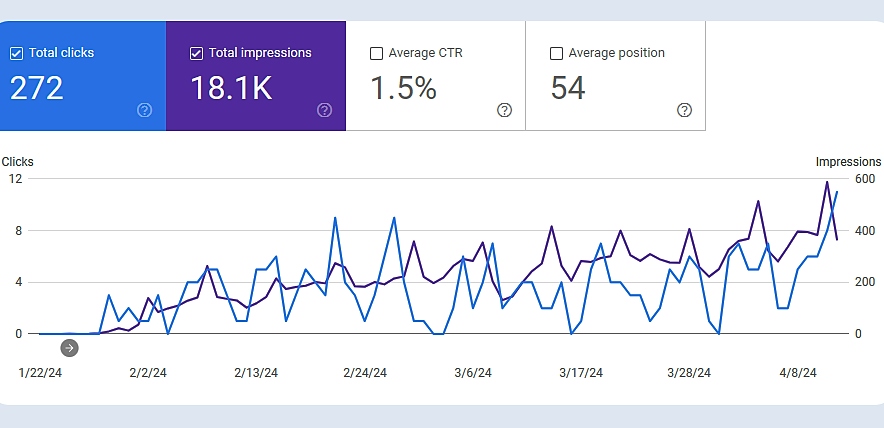
Looking at short timeframes isn't the best way to see if you're getting SEO results. Sometimes, you may see an increased number of impressions and fewer clicks. That's because you're showing up for new keywords in the SERPs. I recommend sticking with the default 3 months or longer.
3. Check Your Keywords Average Position
Finally, you need to see where your site ranks for your target keywords. Getting more impressions and clicks isn't going to bring more business if you're ranking for irrelevant terms.
I can't stress enough how important keyword research is for successful SEO strategies. The company you hired should've done that first. Then, they must focus their SEO efforts on improving your rankings for keywords that matter.
Using the same report, you can see the average position for all keywords your site ranks for. Just check "Average Position" and uncheck the other metrics for a clearer view.
The number above the graph doesn't tell you much. Scroll down and click/tap on "Position" to change the order from top to bottom. That's where the magic numbers are.
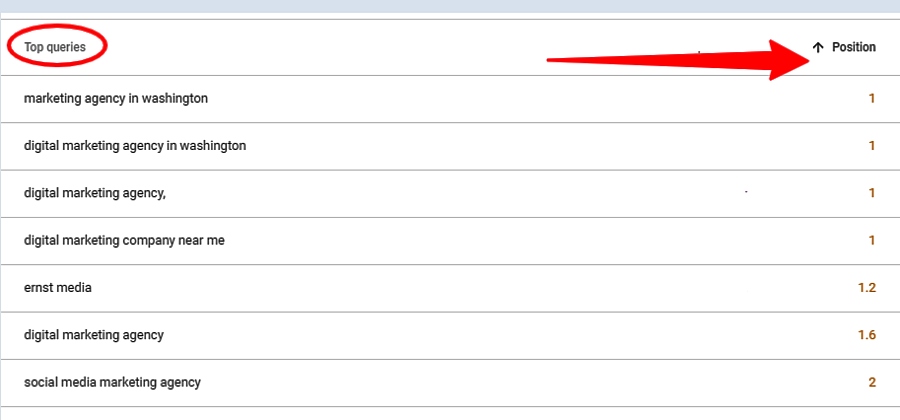
The screenshot shows that the top queries we rank for are all related to our business. Your SEO company must aim for the same results and drive highly targeted organic traffic to your website.
Red Alert: When It's Time to Fire Your SEO Company
Depending on your circumstances, the reports may not exactly match the data I showed you above. That doesn't mean you should ditch your SEO company. Talk to them first.
If your website is brand new or has too many errors that need fixing, you must be patient. It may take 3 to 6 months until you see any improvement in SEO rankings.
However, when evaluating an SEO company, you must be very cautious of strategies that heavily emphasize link-building...That's a Red Alert.
Be wary if you've been:
- Promised a high volume of backlinks in a short period of time.
- Offered low-priced backlinks without discussing quality or relevance.
Such Black Hat SEO tactics are against search engine guidelines. They can lead to short-term gains but are not sustainable and will harm your website in the long run.
Having a bunch of unnatural links pointing to your site is one of the reasons SEO doesn't work.
I'm not saying link-building is bad. It needs to be done the right way. Here is a screenshot from Google's Spam Policies referring to links. I've highlighted the two things you need to pay attention to.
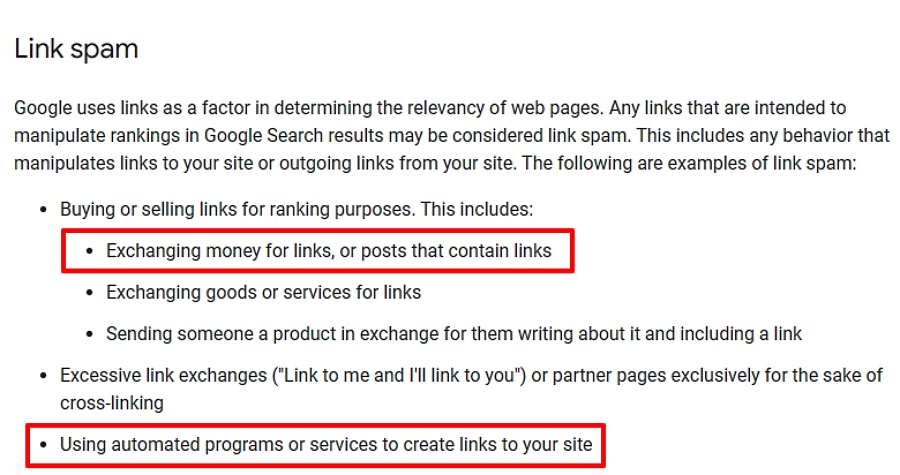
While Google may ignore a few spammy backlinks, if you get many of them, you're most likely to face a penalty. We've had some clients coming to us after being penalized, and the recovery process is painful.
It will cost you more than building a solid SEO foundation from the start.
A Consultant Is Not the Same as an SEO Company
Everything above assumes you hired a company that does the work. A consultant is a different arrangement. Consultants are SEO experts who tell you what to improve and in what order. They don't do the work needed.
That difference matters when you're judging results. The Search Console graphs won't move on their own. Somebody has to make the changes.
Do You Actually Need a Consultant?
Ask yourself three questions:
- Do you know how to use keyword research tools?
- Do you have experience with content writing and on-page SEO?
- Do you understand the aspects of technical SEO?
If the answer to any of them is no, consulting probably isn't a fit for you. Here is why.
1. You'll get general guidelines. When you don't understand how search engines work, you'll ask general questions, so you'll get general answers back. To benefit from consulting, you need at least a basic SEO strategy already in place and someone who can execute the actions you're handed.
We get requests for SEO consulting all the time, and we often turn them down. When we ask those three questions and the answers are no, it's clear the work won't get done after the call. No work means no movement in rankings or organic traffic, and an unhappy client at the end of it. We'd rather say no than take the money.
2. You can't hold a consultant accountable for the results. Advice isn't a deliverable. That's part of why consulting is an attractive business to be in: you get paid for something nobody can measure you on. Hire an agency instead and you sign a contract, and their team does the keyword research, prepares the strategy, and does the work.
An agency isn't guaranteed to deliver either. The difference is that you can check, which is what the 3 steps above are for. If you do go with a consultant, get one with strong recommendations.
3. You'll usually pay more in the end. Apart from running a digital marketing agency, my twin brother Nick and I are hot rodders. Back in the day we did all the work on our own cars to save money. After ruining a couple of engines, we paid twice anyway: once for the parts, once for the labor to put it right.
SEO works the same way when you don't have a deep understanding of it. You choose the wrong keywords, skip the on-page work, tangle the internal links, and create technical problems you can't see. Then:
- You pay an SEO specialist to fix the mistakes you made.
- You pay them again for the keyword research, content and on-page work you needed in the first place.
- And you wait longer, because Google has to re-crawl the site before any of it shows up in search results.
So What Should You Do Instead?
You have two honest options.
You can learn to do it yourself. A paid course will get you to a basic strategy, and then comes the daily work. Be aware that even expensive courses go stale, because Google keeps changing what it rewards.
Or you can hire a company that does the work. That has its own risks, even with a big budget. Plenty of people still sell methods that stopped working years ago, and a large invoice is no proof otherwise. Whether you need local SEO or more traffic for a service-based business, take your time and look for a company that has been in business for a while and has a track record you can check.
Closing Thoughts
I hope that after following the 3 steps, you'll see data showing you're moving in the right direction. If that's not the case, then you need to hire a new SEO agency...This guide will help you make a better choice.
Want to see how we can help increase your online presence?


Founder of Ernst Media. Fifteen years running paid search and paid social for small and mid-size businesses, and still the person who builds the audits by hand. Writes here about what actually moves accounts.