
Since you're looking for common SEO mistakes, I assume you realize that search engine optimization is one of the best types of digital marketing for small business owners.
Now, if you've been running a company blog for 12 months or more and didn't get any organic traffic or experienced a drop in search rankings...
That's another topic I covered in my article on why SEO isn't working.
Here, we'll talk about the 3 most common SEO mistakes small businesses make when starting a blog. You'll learn why certain assumptions or actions will prevent you from appearing in search results.
As the founder of a small boutique digital marketing agency, I talk to other small business owners every day...and here is what they get wrong when it comes to SEO:
- The purpose of a business blog
- The use of AI for content creation
- The way search engine bots work
Of course, I'll dive deeper into these pitfalls to make my point...Let's get started.
Misunderstanding the Purpose of a Business Blog
Everyone wants to show off their small business and get quality traffic from search engines. Running a blog is how you do it...but most people do it wrong.
By wrong, I mean treating a blog like a business megaphone by posting news, company updates, sales, promotions, etc. This is one of the biggest SEO mistakes...let me explain.
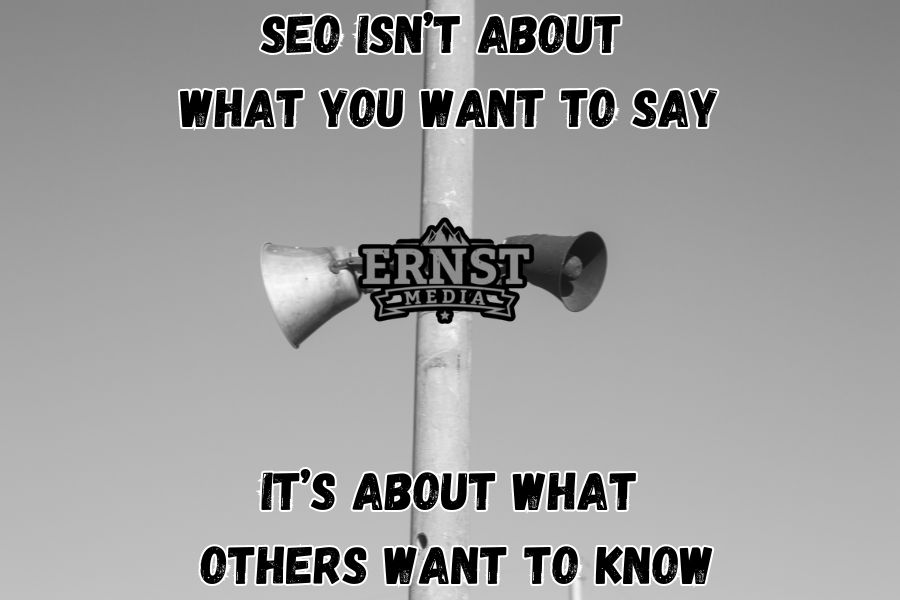
That kind of content may be important to your existing customers, but it's not answering questions folks are typing into Google and other search engines.
You may use it for email marketing or social media posts, but it has nothing to do with SEO.
And then you have the other small business owners thinking their blog is a product catalog. They'd pay us to deliver educational content targeting relevant keywords and optimize it for every possible ranking factor. When it's time for reporting, the results are missing.
They've crammed every blog post with product links and "Buy Now" buttons.
How would you feel when trying to get some questions answered on Google and you land on a page like that?
Probably annoyed...that's why Google keeps a close eye on user experience and no longer ranks such articles.
So, Think About Your Target Audience.
What questions are they asking? What problems do they need solved?
Do some keyword research and put some effort into understanding the search intent. Then, publish high-quality content that guides folks seamlessly to your solutions using internal links.
The purpose of your small business blog must be to attract potential customers, build trust, and establish your company as an authority in your industry.
That's what Google wants you to do...Creating helpful content addressing real search queries.
Focus on that, and you'll start seeing the SEO benefits roll in. Your organic traffic will grow, your search rankings will improve, and you'll be building a solid foundation for your small business's online presence.
Thinking That AI Content Will Get Search Engine Rankings
At Ernst Media, we've been using AI for a while now. It helps us tackle certain tasks a lot quicker, and I'm not gonna lie...at first, we thought it was great for automating the SEO content creation.
We'd provide the article topic and target keywords, write a custom prompt, and voila!
It was such a relief. Finding good content writers who understand SEO has always been very challenging (don't get me started on platforms for freelancers).
A week later, we started noticing patterns, inaccuracies, plagiarism, etc.

It became clear that using AI-generated content and hoping to show up in the top search results is like expecting a microwave to cook us a gourmet meal!
But here is the sad part, according to 2026 SEO stats published by InterGrowth:
- 85% of digital marketers use AI tools to write entire articles
- 66% believe AI content is good or even better than human writing
- 7% don’t review their AI-generated content before publishing it
And if you've hired a freelancer or an agency to do your search engine optimization, you may not notice for months. You cut a sweet deal, but all you got is useless blog content.
_By the way..._You can see if your SEO provider is working by following the 3 easy steps described in this article.
Please don't get me wrong. AI can help a lot with your SEO efforts.
You can generate content and title ideas, create an outline, and perhaps get a decent first draft. What AI can't do is add your unique voice, expertise, and experience in the field.
Bottom line is...Google's not dumb. Unless you're a big-shot publication like Forbes (and even then, it's iffy), purely AI-generated content won't boost SEO performance.
Not Having a Topical Map and Proper Blog Structure
I'll start this section with a quote from Neil Patel, and it goes like this:
“SEO, in a nutshell, is the art and science of pleasing search engines”
You don't need to be an SEO guru with a 12-month content calendar to get started. I can guarantee you that a little planning helps a lot in the long run. Plus, it's one of the most affordable SEO tasks to outsource.
On the contrary, starting without a basic SEO strategy (topical map) is like building a house without blueprints. You may end up with four walls and a roof, but it's going to be a hot mess inside...content all over the place.
And let me tell you, search engines don't like chaos any more than your neat-freak aunt does.
Not long ago, a pet supply store reached out. They've been paying for high-quality content for years, covering everything from dog toys and cat food to hamster wheels...yet their site was generating less than 200 organic monthly visits, and they were looking for the reason.
They signed up for our small business SEO services. We audited the website, dived into Google Search Console, and their SEO mistakes were clear...there was no topical map or content structure.
Their posts were a mess, with no reason for how they were organized. In other words, search engines were struggling to make sense of their site. And it was their fault...paying for top-notch content writing but neglecting the SEO fundamentals.
What is a Topical Map for SEO?
Let's say you're arranging clothes in a relatively big store. You would have separate sections for men, women, and kids...and proper signs your customers can see, right?
Same goes for your SEO content. You need to group related topics in what we call "topic clusters" and then internally link those so crawlers can understand the relationships (site structure).
Having a well-structured site with clear topic clusters tells crawlers you're a comprehensive resource on those topics...And they give you a pass to the SERPs.
Here is My Final Words!
If you want to avoid these common SEO mistakes small business owners make, do yourself a favor and get your ducks in a row from the get-go.
Make your site easy for search engine bots to understand, focus on people-first content, and don't forget that AI tools are just tools...they can't replace you!
On the other hand, at Ernst Media, we are humans.
Whether you need us to work alongside your digital marketing team or craft and execute SEO strategies aligned with your budget independently...reach out.
Together, we'll come up with the best solution.


Founder of Ernst Media. Fifteen years running paid search and paid social for small and mid-size businesses, and still the person who builds the audits by hand. Writes here about what actually moves accounts.