
Most people looking for what you sell start on Google. That part hasn't changed in years, and it isn't going to.
What has changed is how many ways there are to show up there, and how many of them Google has quietly retired. If you read an article on this topic from a couple of years ago, half the campaign types it names no longer exist. Local campaigns are gone. Smart Shopping is gone. Both were folded into Performance Max.
So here is the current picture, from someone who runs these accounts every week.
How Can I Promote My Business on Google?
There are four options worth your time, and they stack in a sensible order:
- Your Google Business Profile and organic search, which cost nothing but time
- Local Services Ads, where you pay per lead
- Google Search ads, where you pay per click
- Performance Max, where Google's automation places your ads across Search, Maps, Shopping, YouTube and the rest
Almost every business we work with needs one or two of these, not all four. Picking the wrong one is the expensive mistake, so I'll be clear about who each option is wrong for.
I'm Evan Ernst. I run Ernst Media, a boutique digital marketing agency in Spokane, WA. We've been doing this since 2026, and our minimum ad spend is $500 a month, month to month, no contracts.
1. Google Business Profile and Organic Search
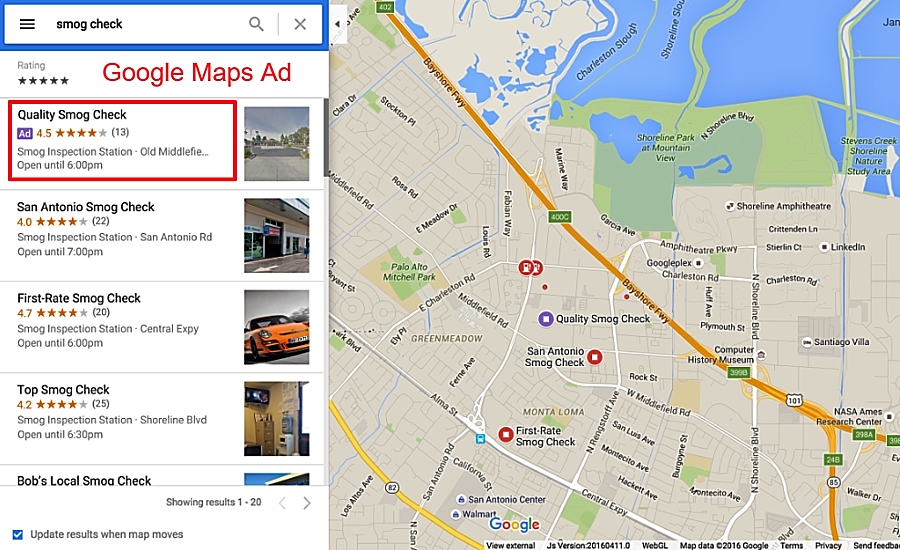
Your Business Profile is the free listing that puts you on Google Maps and in the local pack. You may still know it as Google My Business. Google renamed it, but it's the same asset.
Claiming and verifying it is the first thing to do, before you spend a dollar on ads. It's free, it feeds Maps, and it's what people check when they've already heard your name and want your hours, your reviews and your phone number.
The honest limitation: a verified profile used to be enough to stand out locally. It isn't anymore. Every competitor in your ZIP code has one. A profile gets you in the running. It doesn't get you picked.
The same goes for search engine optimization. Ranking organically is the cheapest traffic you will ever get, and it's the slowest to arrive. Content and links take months to move a page, and you can't schedule the result.
Who this is wrong for: anyone who needs the phone to ring this quarter. If you've just opened, or you're covering payroll from next month's jobs, free listings won't get you there in time. Start ads and let the organic work build underneath them.
2. Local Services Ads
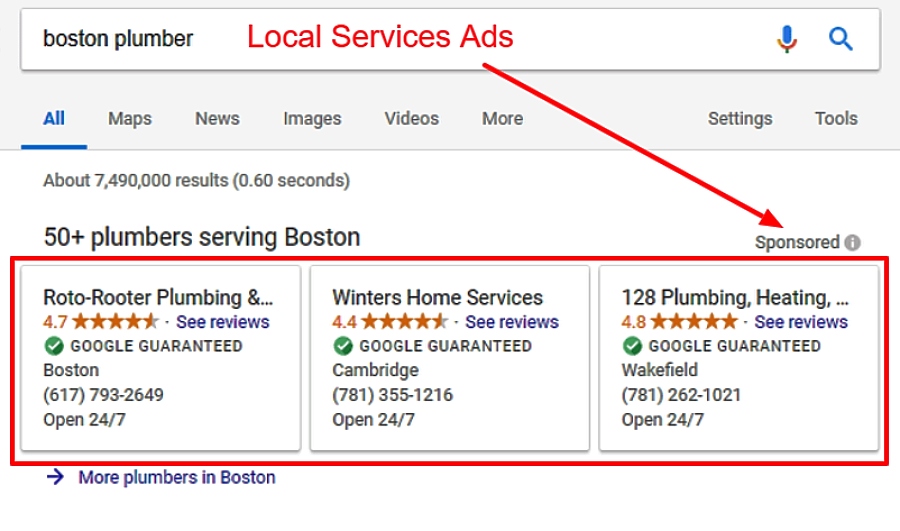
Local Services Ads sit above everything else on the page, including regular Search ads. They're keywordless. Google matches you on your service categories and the area you cover, not on a keyword list you build.
Three things make LSAs different from every other option here:
››› You pay per lead, not per click. A call that goes nowhere still costs you nothing on a mis-click, and you can dispute leads that aren't real. That changes the math for service businesses in a way that's hard to overstate.
››› You have to pass a screening. License and insurance checks, background checks in some categories. It takes longer to launch than a Search campaign.
››› Passing gets you a badge. Google consolidated the old Google Guaranteed, Google Screened and License Verified badges into a single Google Verified badge in October 2026, and the money-back guarantee that came with Google Guaranteed was discontinued at the same time. Verification still signals something to a searcher. It no longer promises them a refund, so don't sell it to yourself as one.
Worth knowing before you plan around it: Google started migrating Local Services Ads accounts into Google Ads as Performance Max campaigns with a pay-per-lead goal in 2026, beginning with U.S. home and storefront service categories. Pay-per-lead pricing survives the move. The separate LSA dashboard doesn't. If someone shows you a walkthrough of the old interface, check the date on it.
I've gone deeper on all of this in our post on Local Services Ads.
Who this is wrong for: anyone whose category isn't eligible, which is still most of retail, most e-commerce and a good chunk of B2B. The eligible list is built around home services, legal, health, wellness and a handful of automotive and beauty categories, and parts of it are limited to specific states. Check your category before you build a plan on it. LSAs are also wrong for you if you can't answer the phone. Missed calls hurt your ranking in the LSA auction, and the leads you paid for walk to whoever picked up.
3. Google Search Ads
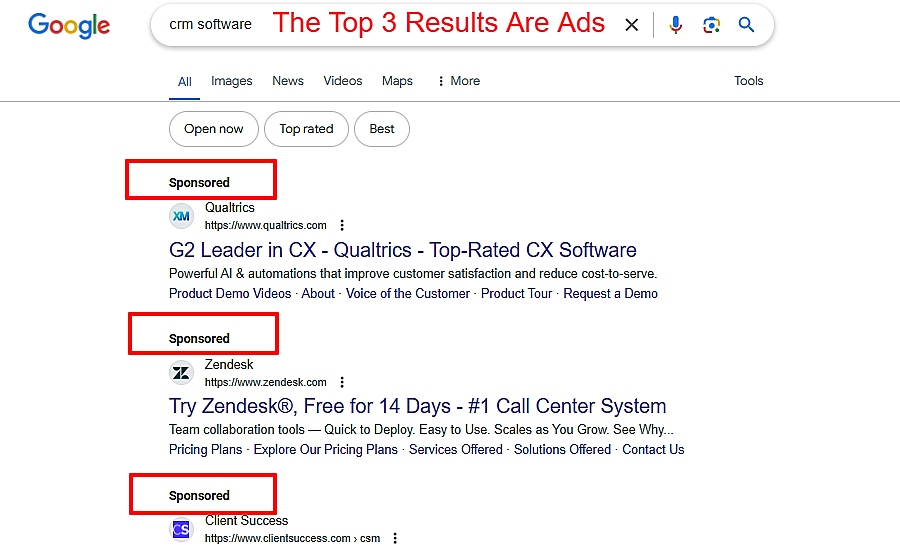
Standard Search campaigns are the workhorse. You choose the keywords, you write the ads, you see which search terms spent your money. Nothing else on this list gives you that much control.
The two situations where we reach for Search ads first at Ernst Media:
- A business that needs demand now, before organic has had time to do anything
- A promotion with a deadline, where waiting isn't an option
Search ads also reach past your city in a way the local options can't. That matters for B2B, for anyone serving a whole state or the whole country, and for nonprofits running a Google Ad Grant. Mind Share Partners is one of ours, and their Ad Grant account does work no Maps listing could.
What makes Search ads worth the effort:
- Keyword-level control over what you show up for
- Search term data, so you can see exactly what people typed
- Location, device and audience targeting you set yourself
- Budgets you can change today and results you can measure against your marketing KPIs
The drawback is the same thing as the advantage. There are hundreds of settings, and several of them default to something that spends your budget badly. Broad match with an untended negative list is the classic one. That's why a lot of owners hand us the PPC campaign management instead, and why we charge $95 an hour for it rather than a percentage of your spend.
Who this is wrong for: anyone under about $500 a month in ad budget in a competitive category. Below that you don't gather enough data to optimize, and the account never gets out of guessing. Our own minimum ad spend is $500 a month for exactly that reason. It's also the wrong first move if nobody is searching for what you do, which is more common with genuinely new products than people expect. Google ads work for small businesses, but only where the demand already exists.
4. Performance Max
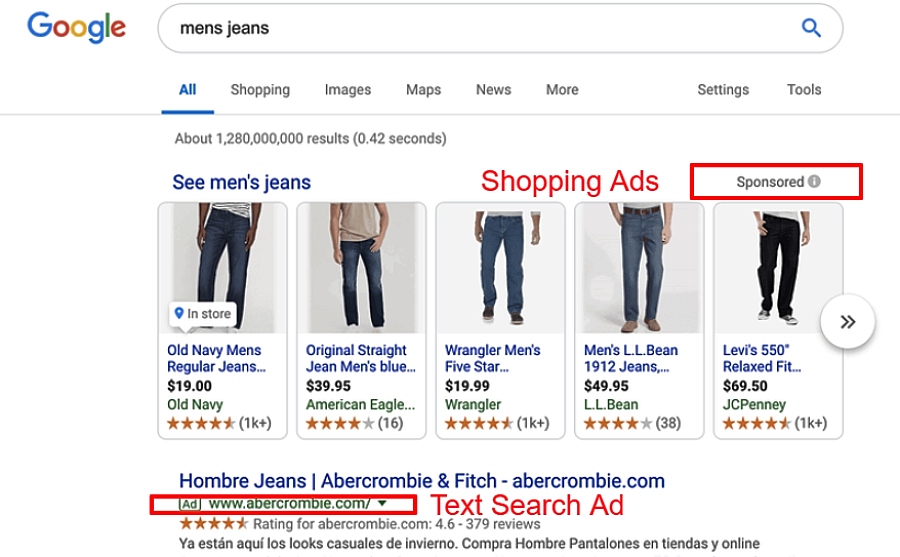
Performance Max is where Google put everything it consolidated. Local campaigns went in. Smart Shopping went in. If you sell products and want them in the Shopping results with an image and a price, or you want Maps placements driving store visits, this is now the campaign type that does it.
You give it assets, a product feed through Merchant Center if you're selling products, a conversion goal and a budget. It decides the placements.
That trade is the whole story. You get reach across surfaces from one campaign and a lot less setup. You give up the keyword-level control you have in a Search campaign, and reporting is thinner than what standard Shopping gives you. Standard Shopping campaigns still exist, and for e-commerce accounts that want to see and steer product-level performance they're often the better starting point. Our guide to structuring a Shopping campaign covers that side.
Who this is wrong for: any account without reliable conversion tracking. Performance Max optimizes toward the conversions you report, so if your tracking counts form loads instead of form submissions, it will confidently spend your budget chasing the wrong thing. Fix the tracking first. It's also a poor fit for a small local service business with one conversion type and a tight budget, where a Search campaign or LSAs will teach you more for the same money.
Ready to Start with Google Ads?

Do You Need a Website to Promote Your Business on Google?
Not for all of it. A Business Profile and Local Services Ads both work without one, because the lead comes to you as a call or a message rather than a page visit.
For Search ads and Performance Max, you need somewhere to send the click. A single landing page is enough to start. What matters is that the page answers the search that triggered the ad and makes the next step obvious. Sending everyone to a homepage is one of the most common ways ad money gets wasted.
That's the current set. Start with the free listing, add the paid option that matches how you actually get customers, and ignore the other two until they're relevant.
If you want a second opinion on which one that is for your business, or you have questions about digital marketing for a small business more broadly, send us a message or get on a quick call with me.

Founder of Ernst Media. Fifteen years running paid search and paid social for small and mid-size businesses, and still the person who builds the audits by hand. Writes here about what actually moves accounts.