
There are 4 types of digital marketing you need to focus on when scaling a small business...And building your social media presence is one of them.
All social media tips I have for you are proven to work. Use them as guidelines, and you'll get more from your marketing efforts as a small business owner.
What do I mean by proven?
Besides running a boutique marketing agency, my twin brother and I are obsessed with classic cars. Starting in 2005, we've built a large audience on many social media platforms.
What you'll read is based on:
- The work we do when managing social media accounts for clients
- The experience we have from growing our classic car online channels
Now, let's get to the point.
The Social Media Marketing Tips for Small Businesses
Even if you've been doing social media for a while, I encourage you to read through the article. Most small business owners I know have a lot on their plates and make common digital marketing mistakes.
These tips will help you avoid some.
In fact, this post can be your handy social media marketing guide.
We'll start with the basics, then talk about content, and touch on social media ads at the end.
1. Optimize Your Social Media Accounts for Brand Recognition
Create profiles on all major social media platforms (at least 4). You won't use them all actively, but having those will tell Google you're a real business.
To be successful in social media marketing, you need a well-defined brand identity.
Use a high-quality logo with impactful colors as a profile picture on all accounts. Since cover photo sizes aren't the same on all social platforms, check the recommendations first.
The cover photo is where you can get creative...But whatever you do, the goal is to reflect your brand and show what your business is about.
Branded images, company name and slogan, calls to action, photos of your team, etc.
We used different images on the Classic Nation website and Facebook page, but they tell the same story...We are into hot rods.
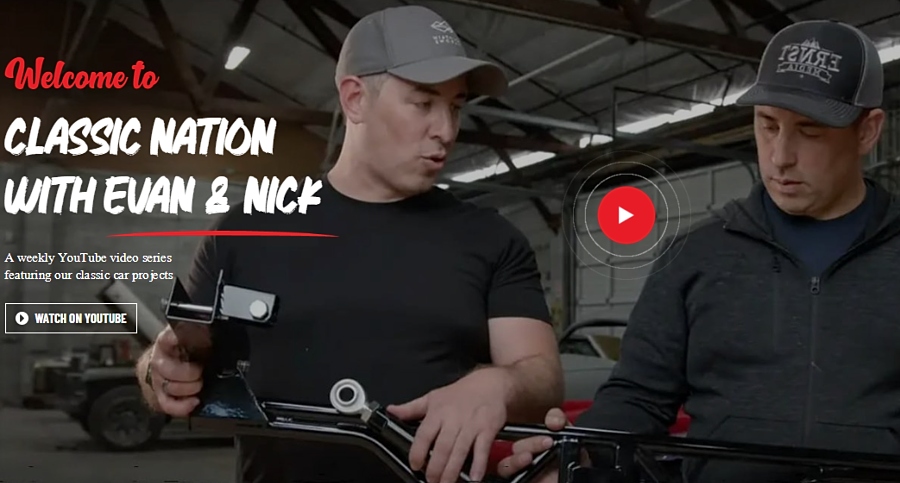
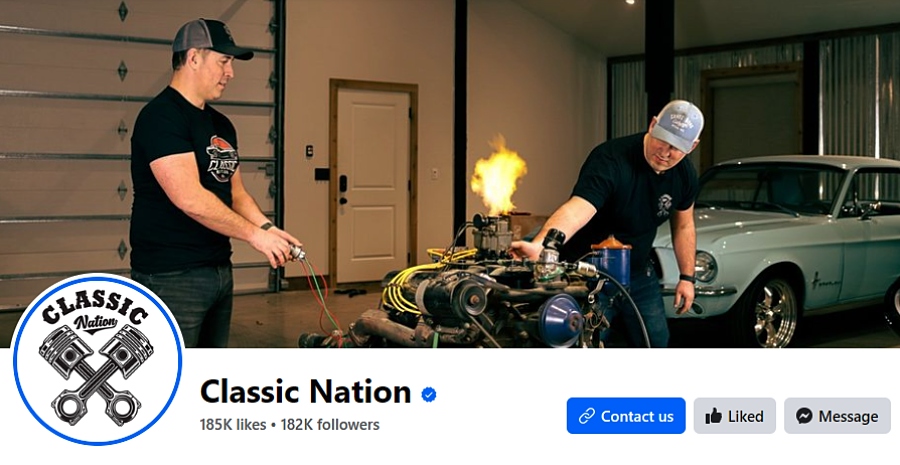
Write a short and clear bio using keywords related to your business. Use it across all social media accounts, and add a link to your website.
Although no-follow, social media backlinks are important.
2. Discover Your Target Audience and What Content They Like
When you're starting from scratch, this seems like a big challenge...It's not. Yes, this is social media marketing, but it's still marketing.
Let me start by quoting Rick Burnes, VP of Content Products at BookBub:
"They don’t care about your products. What they’re interested in is solutions to their problems"
You know what problems your product or service aims to solve, right?
Your target audience is the people who have that problem. I bet they have other things in common...Age, gender, location, interests, etc.
For example, if you sell wood-burned art...Your audience would be middle-aged women interested in arts and crafts.
Now, you need to figure out what content they engage with.
The best way to do it is by finding your competitors and popular influencers in your industry. Go through their recent social media posts and analyze the engagement.
Whatever works for them will most likely work for you.
3. Pick the Social Media Platforms Worth Your Time and Efforts
Now that you have an idea of who your potential customers are, look at the demographic data of each social media platform...Then, match it with your audience.
This will narrow down your options, but not enough.
Something I learned more than a decade ago is that...As a small business owner, you don't have time or a team to manage 4-5 social media accounts.
Check out my blog post on the 3 Best Small Business Social Media Platforms.
Start with one or two platforms where your audience is most active and topics related to your business are trending. Use tools like Social Mention to track social media trends across multiple platforms.
We never created TikTok or Pinterest accounts for Ernst Media. Why...Because that's not where SMB owners looking to outsource digital marketing services hang out.
4. Create a Basic Social Media Strategy You Can Build on
You can't start with the most effective social media marketing strategy...You don't have the data for that. But you already know who you'll target and the platforms you'll focus on.
So, set your current social media business goals and create a content strategy around them.
My advice is to start by building brand awareness and a follower base that will engage with your posts. The data you'll gather after a while will tell you how to:
Promote something, drive traffic, or generate leads without annoying your followers.
Keep analyzing what works and what doesn’t. Use those insights to tweak and improve your strategy over time, and your social media efforts will bring results.
5. Experiment, But Go Hard on the Content Formats That Work
This is one of the social media tips that can impact your small business the most.
Certain types of content perform better on each social platform:
- Facebook: Reels, user-generated content, and engaging polls.
- Instagram: High-quality photos, Stories, Reels, and carousels.
- X (Twitter): Concise text updates, memes, GIFs, and quick polls.
- LinkedIn: Long-form text posts, industry news, and slideshows.
- TikTok: Engaging videos, challenges, and behind-the-scenes clips.
- Pinterest: Attractive images, infographics, and step-by-step guides.
Still, I encourage you to experiment. Three kinds of content have worked for almost every small business we've managed accounts for, whatever the format of the day happens to be.
» Behind the curtain. Show people your day-to-day operations...A quick office tour, or a clip of your product being made. It humanizes the brand and shifts the focus away from hard selling. You don't need professional editing for it. Grab your phone, start filming, and keep it casual.
» Industry news and trends. Take a long article or video published by an authority in your field and break it down into bite-sized key points. Ask a question at the end to invite replies, and tag the source to avoid copyright issues. Your followers get the takeaway without the reading time, and you get credit for the summary. It works well on X and LinkedIn, and it positions you as someone on top of your field.
» How-to guides. Not "here is how to buy from us"...Teach the DIY hacks people can apply without paying you anything. Think about the questions prospects ask you most, then break the answer into simple, actionable steps in a short video or a set of slides. They'll see you as a helpful resource, not another business trying to sell them something.
Despite general trends, focusing on what works best for you is key. Analyze social media metrics to identify which formats can get you closer to your goals and double down on those.
6. Repurpose Content Across Different Social Media Channels
Repurposing means taking a piece of well-performing content and adapting it for use across several platforms. As Any Woods defines it:
"Repurposing is about getting the maximum return from every piece of content you create"
Gary Vee is a master of this social media strategy. He breaks down keynote speeches into short-form videos for Instagram, Facebook, LinkedIn, etc...And even transforms them into blog posts.
Even without Gary's marketing team, small businesses can still benefit from repurposing:
- Engage different audiences on various social platforms
- Reduce the time needed to create content from scratch
- Maintain the brand message across all social channels
The same logic applies to your blog. Don't let old posts gather dust...Open your blog analytics and look for the ones driving steady organic traffic, or the ones that got shares and comments when you first posted them.
Take those winners and break them into short content. Turn key points into quotes, a thread of tips, or a quick video summary.
You already know the information resonates with your audience, so you're not guessing...And you reach the people who missed the post the first time around.
7. Don't Just Post - Keep Your Audience Engaged Everyday
I still see small businesses assuming social media marketing is just about posting. They create great educational blog content for SEO purposes, then share and forget it.
You need to interact with your audience on all social media channels.
And by interacting, I don't mean replying to comments with "Great" or "Thanks"...Engaging in conversations, it's an opportunity to:
- Understand what your target audience needs
- Help followers learn more about your business
- Send the right signals to social media algorithms
In the beginning, you may have 1 or 2 comments. Reply to those ASAP by asking questions to instigate further engagement.
Community management must be part of your social media efforts.
8. Implement User-Generated Content (UGC) in Your Strategy
UGC is any content created by people rather than brands. A very powerful tool for marketers, making social media more important than ever.
For small business owners, showing real-life experiences with products or services is the best way to build brand awareness and credibility.
UGC also serves as social proof, and stats from Flockler show buyers love it.
- People spend an average of 5.4 hours a day engaging with UGC
- 93% of buyers find UGC very helpful for making buying decisions
- 40% have bought something after seeing UGC on social media
At Ernst Media, we mostly do social media marketing for small businesses, and collecting user-generated content is part of every strategy.
Here are some ideas you can try:
» Run a photo contest asking followers to post a picture holding your product in exchange for freebies.
» Service providers can ask for testimonials, offering 1-year free of charge for the best submission.
» If you run a restaurant, give discounts to folks sharing photos of their meal checking in at your location.
Customer success stories are the strongest version of this. Reach out to the clients you've done good work for and ask two questions: what problem did we solve, and what changed afterwards.
Be ready to work for it. People are busy, and most won't send anything back even when they promise...Offering a discount on a future purchase or something free moves it up their list. Most business owners give up after one email and miss the opportunity.
UGC becomes much more effective than influencer content. It will also help you boost sales.
9. Don't Rely Heavily on Social Media Management Tools
I understand running a small business is associated with endless responsibilities...Putting your social media marketing in auto mode is tempting, but be careful.
Yes, there are plenty of useful paid and even free tools. However, relying too much on those takes away the authenticity, and your target audience won't connect with your brand.
Use social media content calendar software or scheduling tools to help you...But allocate some time to interact with your followers personally. They'll appreciate it.
10. Invest in Advertising Campaigns, But Do It Like a Pro
Running Facebook ads or advertising on YouTube is how you scale social media efforts and your small business. I'm talking about reaching a broader but laser-targeted audience that you'll transform into new customers.
The best social media platforms also allow you to capture leads at any stage of the digital marketing funnel. And if you need high-quality leads that mean business...look no further than LinkedIn ads.
I said leads because direct selling with social media ads no longer works as it used to. There are some exceptions, like incorporating UGC in your advertisement.
To get a decent return on your investment, you need to manage social media campaigns like a pro...Boosting posts or using automated targeting, bidding, etc., will lead to nothing.
In other words, you have three options:
- Invest time and money to experiment and learn
- Hire an in-house social media marketing team
- Share part of your marketing budget with experts
Many small businesses we're working with have tried managing ad campaigns in-house. Some recorded short video content sharing their experiences before and after partnering with us.
Watch a couple of videos on this page__...It will help you relate to the experiences of other small business owners and make an informed choice.
11. Track Social Media Analytics to Improve Ad Performance
If managing social media ads in-house, make sure you track important key performance indicators. It will help you optimize campaigns and get a better return on your ad spend.
Here are some guidelines:
» Have well-defined objectives for each advertising campaign to track the success of social media ads.
» Use Google Analytics data combined with the metrics provided by each social media platform.
» Analyze weekly (if daily isn't possible) to identify trends and patterns for optimal budget allocation.
» Do regular A/B split tests experimenting with different ad variations and focus on what works best.
My Last Thoughts
The 11 social media tips I've covered will help you increase your small business visibility and brand recognition...But it won't happen overnight.
Whether handling all social media marketing in-house or delegating certain tasks to professionals, make sure you:
- Maintain a consistent brand identity on all channels
- Focus on authenticity and high-quality content
- Optimize your strategy based on data-driven insights
The other thing to plan for is pace. Trends change, algorithms shift, and platforms keep adding and retiring features...Keeping up with all of it while running a business is hard, which is why so many owners hand this part off.
If you need help with your digital marketing strategies...Don't hesitate to reach out.
My team and I at Ernst Media specialize in social media, PPC management, and SEO services for small businesses.


Founder of Ernst Media. Fifteen years running paid search and paid social for small and mid-size businesses, and still the person who builds the audits by hand. Writes here about what actually moves accounts.