
You can find many comprehensive guides and definitions of search engine marketing (SEM).
As the founder of a Boutique Marketing Agency that works with small and medium-sized businesses...I know that most folks prefer simplicity.
Here is what I'll cover in this relatively short article:
- What Does Search Engine Marketing Mean
- What Are the Types of SEM (with Examples)
- The Pros & Cons of Search Engine Marketing
By the end, you'll have a basic understanding of how this online advertising method works. Then, you can decide whether to learn more and implement SEM in your business's digital marketing strategy.
The Search Engine Marketing Definition
Search engine marketing (SEM) is an effective online advertising method for achieving quick results. Its main objective is to provide immediate website visibility in search engine result pages.
Search engine marketing is also known as paid search marketing. Thus, you shouldn't confuse it with search engine optimization (SEO).
» Search engine marketing aims to generate website traffic by getting users to click paid ads.
» The goal of SEO is for website content to appear organically in search engine results pages.
The founder of Search Engine Land coined the term SEM in 2001. I respect him for his great work over the years, but I disagree with some of his more recent statements.
"These days, I still push that SEM = SEO + PPC. But to some, that’s been bastardized into SEM = PPC"
Search engine results pages often contain informational content with no marketing intentions. Thus, SEO isn't part of SEM.
PPC advertising is also available on platforms like Facebook, which aren't search engines. For me, SEM and PPC are different.
In Simple Words, Search Engine Marketing is:
A tool that will help your business reach people on the spot when they search for products or services you offer. If someone types a query into search engines like Google, your targeted ads show up alongside organic search results.
In fact, paid search results are always above organic search results. Your ads can appear below only if you don't meet the ad rank threshold. That's why Google Ads work great for SMBs that don't have the time and resources needed to achieve the long-term benefits of SEO.
When folks ask me to compare organic traffic to paid traffic, I say it's like taking the stairs instead of riding the elevator. Both get you to the top floor. Only one gets you there today.
How Does Search Engine Marketing Work?
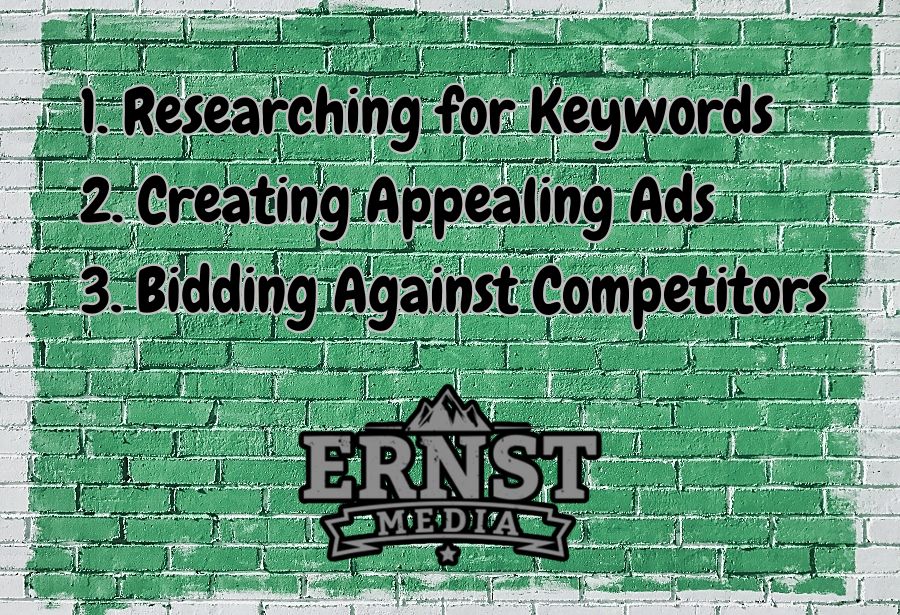
The search engine marketing process starts with keyword research to find search queries (specific keywords) related to your business. Next, you create ads for your SEM campaign targeting those keywords. Then, you compete with other advertisers by placing bids.
To run a successful SEM campaign, you need to:
- Find relevant keywords that resonate with your target audience
- Create appealing ad copies and landing pages that convert
- Have an optimal bidding strategy that keeps your budget in check
- Measure SEM performance and optimize regularly for good ROI
Matching Intent, Not Just Demographics
With other types of digital marketing, like social ads, you target people by demographics, interests, and behavior. On a search engine you can also match what the person is trying to do at that moment.
Say you own an interior design studio and want to promote your business on Google.
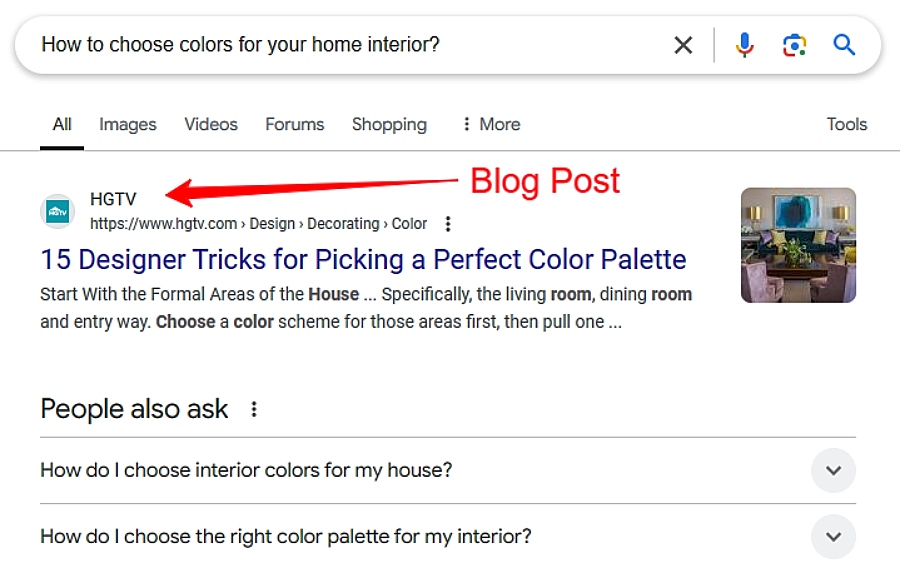
For an informational query like "how to choose colors for your home interior," the top results are blog posts.
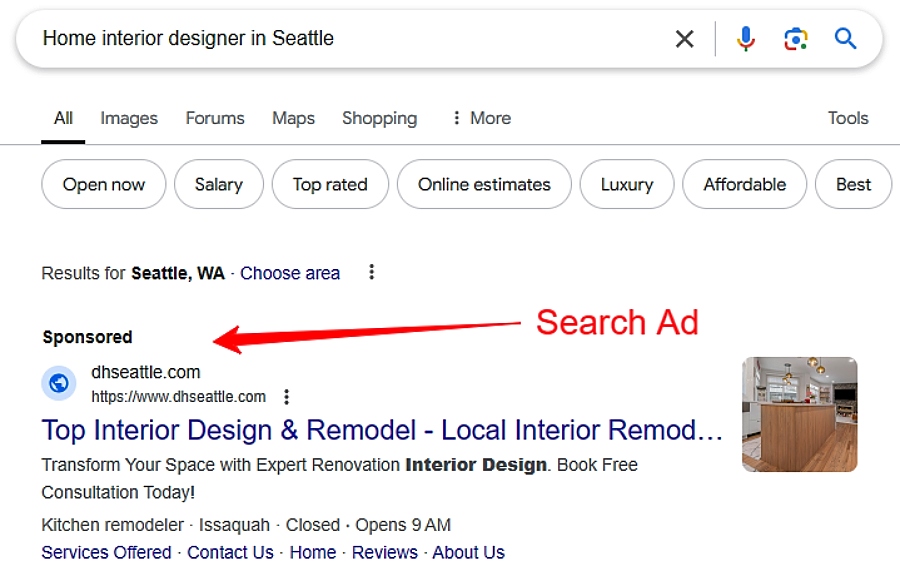
For a transactional keyword like "home interior designer in Seattle," the top results are ads.
That difference is the real job of keyword research. Sort the queries by intent, then bid on the ones where someone is ready to hire or buy. Add geo-targeting and your budget only reaches people in your service area who are close to a decision.
Two things then decide whether that traffic turns into leads: how you manage and optimize the campaign, and how well the landing page answers the problem behind the query.
Now, let's look at the paid search advertising options.
The Main Types of Search Engine Marketing
Google Ads is by far the most popular platform for SEM ad campaigns.
I have a more detailed article explaining the 4 best ways to promote your business on Google. Here, you'll see a brief description and visual example of each ad type you can use in your SEM strategy.
That said, search engine marketing includes:
Search Ads
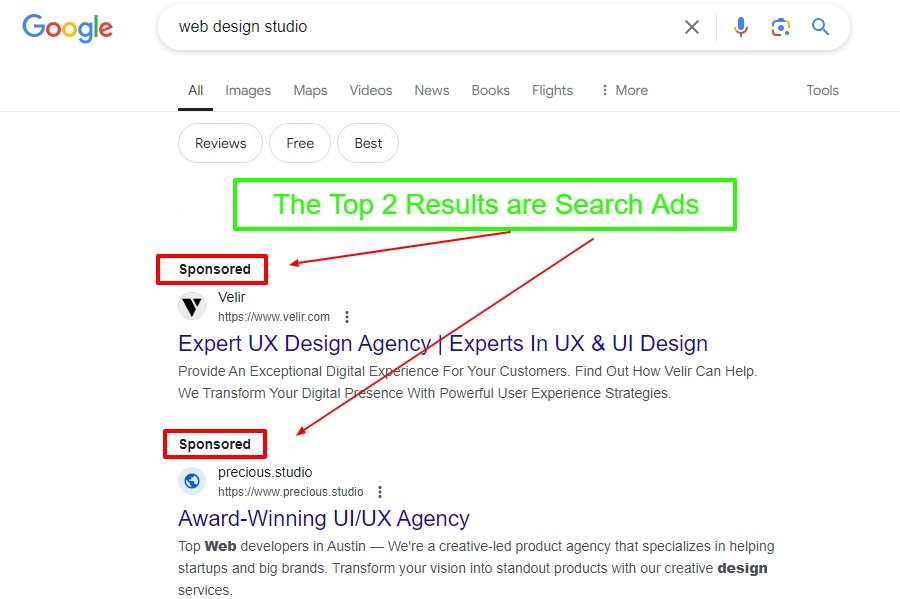
Your message appears above organic results when users search for keywords relevant to your offerings. A persuasive paid search ad copy and attractive image (optional) speak directly to your target audience and encourage them to take action.
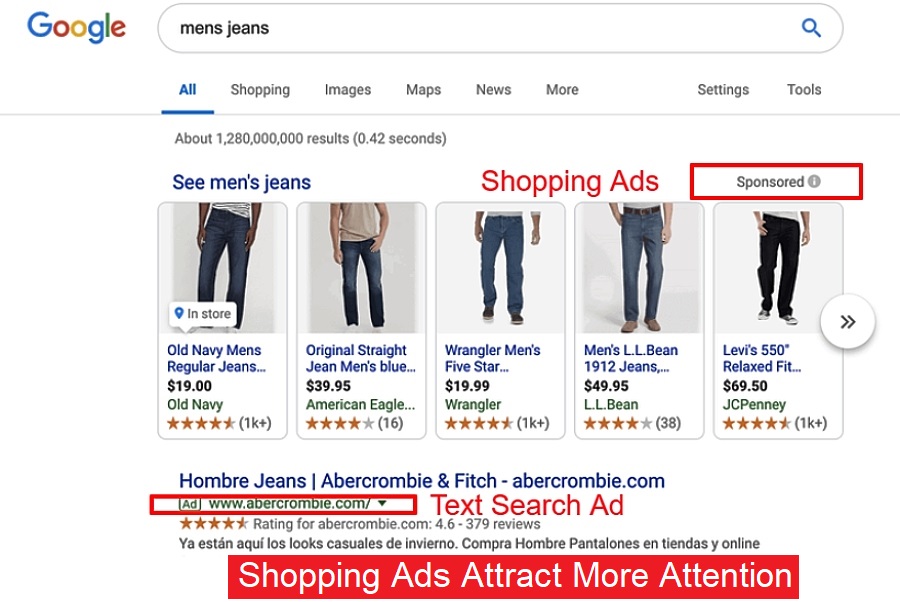
Shopping Ads
These are perfect for e-commerce businesses. They display your products with an image, price, brand, and brief description right in the search results. The visually appealing Shopping ads capture the attention of those ready to buy, driving quality traffic to your online store.
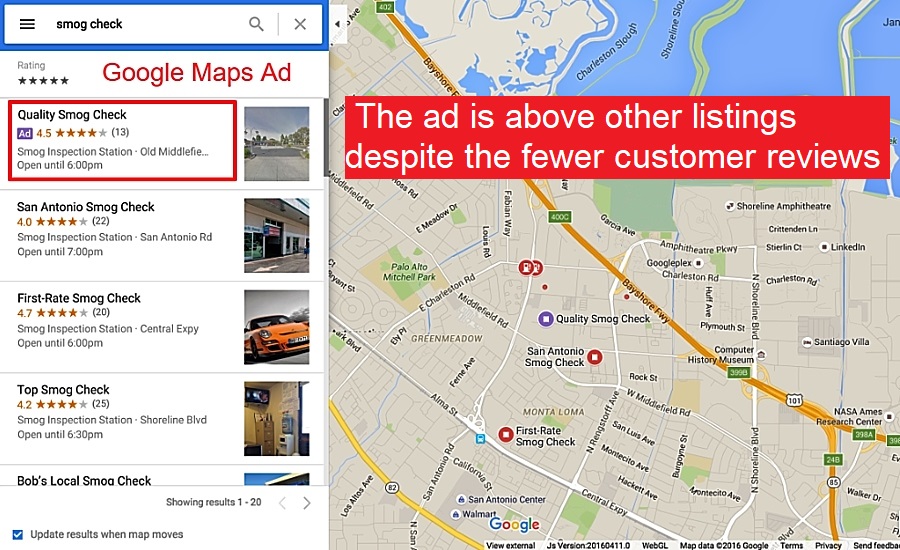
Ads on Google Maps
With Google Maps Ads, you can put your local business in front of nearby customers searching for what you have. They display your business information, making it simple for customers to find and visit your physical location. These ads appear above organic Google business listings.
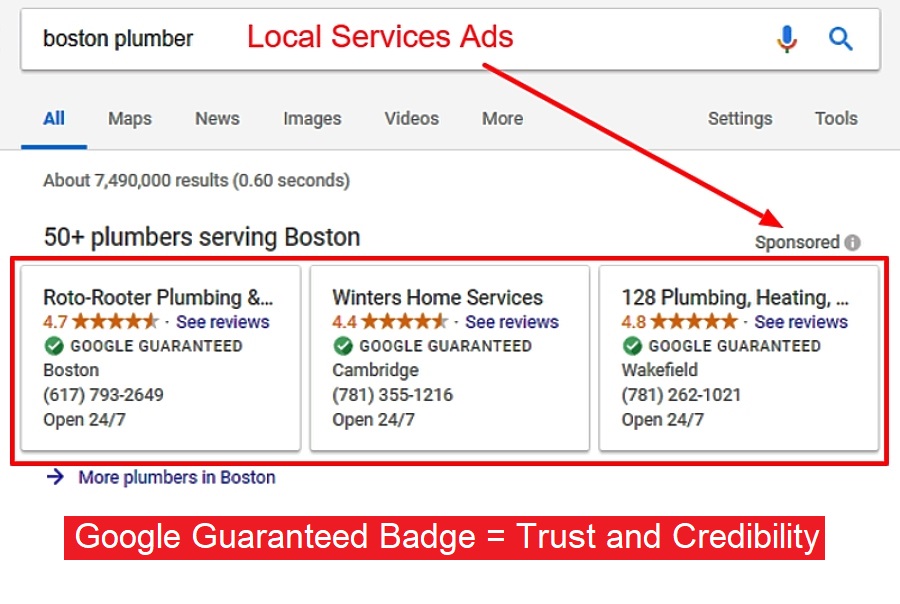
Local Service Ads
Tailored for service-based businesses, Google's LSAs connect you with people searching for the services you provide. Apart from your business info, these ads show additional verifications to help you establish trust and credibility. You don't pay per click but for valid leads.
I'm sure you realize the importance of Google's paid advertising for your biz...but throwing some numbers never hurts.
According to Statista:
In Q1 of 2026, Google accounted for over 95% of the mobile search market in the US. With about 59% reach among mobile audiences, Google Search is also one of the most used mobile apps.
Scaling a Campaign Up or Down
The part small businesses tend to underrate is how fast an SEM budget moves in either direction. You can change it the same day, and the levers are simple.
Launching a product or entering a new market? Push harder by:
- Bidding on more competitive keywords
- Expanding your geographic targeting
- Increasing how often your ads show
- Testing different ad formats
Slow season, or cash is tight? Pull back by:
- Lowering the daily campaign budget
- Bidding on cheaper, less competitive keywords
- Narrowing targeting to the segments that convert best
There's a third move we use more often than either of those: leave the total budget alone and shift it between campaigns. After a PPC account audit for a Seattle client running several Shopping campaigns, one had a clearly better ROAS than the rest, so we recommended feeding that one instead of asking for more money. What steady growth looks like over a longer stretch is written up in our home services Google Ads case study.
Decide with numbers rather than a hunch. Agree on the KPIs that matter before you touch a budget. Day to day, that back and forth is what PPC management actually is.
Search Engine Marketing Pros and Cons
Here is the short version of what you gain and what it costs you.
Benefits of SEM
- Quick visibility and website traffic
- Competitiveness in local markets
- Reaching the most relevant audience
- Analyzing data to measure results
- Full control over advertising costs
- Brand recognition and credibility
That last one deserves a sentence, because clients who come to us for quick leads rarely think about it. Sitting at the top for the terms your market searches builds recognition that outlasts any single campaign, and it matters most in industries where the buyer has plenty of options. Brand is a key factor in a digital marketing strategy, not a side effect of one.
Drawbacks of SEM
- Ongoing investment to maintain search visibility
- High search volume keywords are expensive
- Effective SEM campaigns are time-consuming
The ongoing cost is the one that bites. SEO keeps working after you stop paying for it. SEM stops the day the card does, so someone has to watch and trim the campaign or it overspends quietly.
The other trap is chasing the number one position. We work with businesses in competitive industries where a national brand can outbid anyone in the auction. If you can't match those bids, fighting for the top spot eats the budget on clicks you could have bought lower down for less.
SEM isn't a fit for everyone. We treat $500 a month in ad spend as the floor: below that there aren't enough clicks to learn from, and the account never gets past guessing. If you can't sustain that month after month, put the money into SEO or another channel first.
My Last Thoughts
I've been doing this for about two decades, but in the 2020s...digital marketing is undoubtedly the most effective option for scaling a business.
Yes, it comes with certain challenges, but as the saying goes...
We don't grow when things are easy!
If you have any questions or need advice...I'm happy to help.


Founder of Ernst Media. Fifteen years running paid search and paid social for small and mid-size businesses, and still the person who builds the audits by hand. Writes here about what actually moves accounts.